AI for marketing and communications teams
Practical AI for marketing and communications teams: a clear strategy, safe workflows, tools that fit and training that gives your team hours back each week without putting quality, data or reputation at risk.
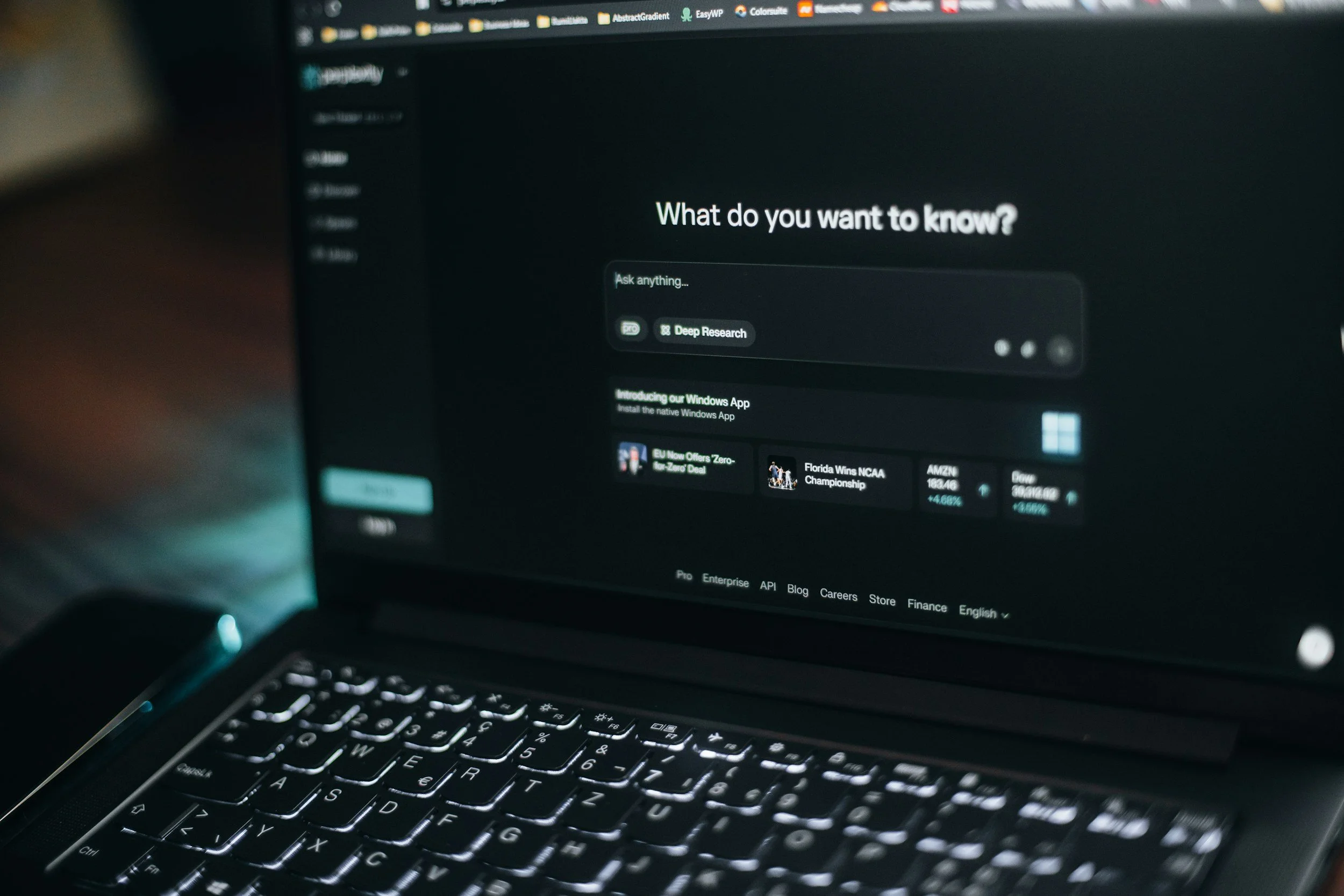
Everyone’s trying AI. Few are getting much from it.
AI use in UK businesses has roughly tripled since 2023, to around 35% of firms with ten or more employees. But only 10% of those using it describe their use as extensive, and only 11% of businesses have trained more than half their staff, according to the Office for National Statistics. Lack of expertise is one of the most common barriers.
In most marketing teams, that looks like a few people using a chatbot for the odd draft, no agreed rules, and nobody sure what’s allowed, what’s safe or what’s actually saving time.
From experiments to a system
We help you move from scattered experiments to AI that is built into how your team works: chosen for specific tasks, governed by clear rules, checked by people, and measured by the time and money it saves.
Strategy
Where AI can genuinely help your marketing and communications: drafting, research, summarising, repurposing content, reporting, personalisation and analysis. Prioritised by value and risk, with a realistic roadmap.
Governance
A clear AI policy for your team: what data can and can’t be used, which tools are approved, when a human must check the output, how to stay accurate and on-brand, and how to be open with your audiences about AI use.
Implementation
Approved tools set up and connected, prompt libraries written for your organisation’s voice, and workflows with clear human sign-off for content, PR, social media, email and reporting.
Training
Hands-on sessions that teach your team to use AI well and critically: prompting, checking, editing and knowing when not to use it. Everyone leaves with workflows they can use the next day.
Where AI saves time in marketing and comms
First drafts of press releases, newsletters, social posts and web copy
Repurposing one piece of content into many formats
Summarising reports, meetings, consultation responses and feedback
Research, briefing notes and competitor scans
Turning data into readable performance reports
Accessibility: alt text, plain-English versions and captions
Why ZGMC?
We use it every day
AI is built into how we run our own consultancy, from a press release assistant and a PR fact-find tool to a social media copywriting tool. We recommend what we’ve tested in real client work, not what’s in a vendor’s demo.
Safeguarded by design
Much of our work is with schools, charities, housing and public bodies, where trust, data protection and safeguarding are not optional. Every workflow we build keeps a human in the loop and your data where it should be.
People first
AI should take the repetitive work so your team can spend more time on what people do best: judgement, relationships, creativity and care. We build it in that spirit, and we’ll tell you plainly where it isn’t worth using.
Frequently Asked Questions
-
Mostly by taking on time-consuming, repetitive tasks: first drafts, summaries, repurposing, research and reporting. Used well, it frees people for strategy, relationships and creative work, and helps a small team keep up with a big workload.
-
It can be, with the right rules. That means approved tools, clear limits on personal and confidential data, human checks before anything is published, and openness with your audiences. We put those safeguards in place before anything goes live.
-
Yes, if anyone in your team is already using AI, and they probably are. A short, practical policy protects your organisation and gives staff confidence about what they can do.
-
It depends on your systems, budget and data rules. I’m not tied to any vendor. I’ll recommend the simplest tools that do the job, often ones you already pay for.
-
That isn’t the aim. Most organisations use AI to do more with the team they have, not to cut it. We focus on giving people back time for the work only they can do.
Start with a conversation
A free 30-minute call. Tell me how your team uses AI today, or doesn’t, and we’ll suggest the two or three changes that would save the most time safely.